A Little Ayurveda in the AM
Randi Marie Mittelberg | OCT 4, 2023
ayurveda
yoga
meditation
holistic
health
fitness
herbal
lifestyle
natural
ayurvedic
meditate
morning
routine
ritual
healing
alternative
dosha
vata
pitta
kapha
elements
harmony
balance
prevent
energy
chakra
mindfulness
graditude
intergrated
longivity
vitality
ancient
india
vedic
veda
transformation
medicine
cleanse
oil
essential oil
body
mind
soul

Ayurveda is an ancient system of healing methods consisting of holistic alternatives that originated in India. The idea that the universe is made up of five elements - earth, wind, fire, air and ether (space) - is the base of beliefs. The elements all come together to form energy that govern our physical and mental characteristics. These energies are known as Doshas. Most people will have one dominant dosha, but it is important to keep all three aligned. The three doshas are:
- Vata: The energy of movement, creativity, and spontaneity. It is composed of air and space elements. People with a dominant vata dosha are usually thin, energetic, adaptable, and enthusiastic. They may also be prone to anxiety, insomnia, dry skin, and constipation.
- Pitta: The energy of transformation, digestion, and intelligence. It is composed of fire and water elements. People with a dominant pitta dosha are usually medium-built, sharp, ambitious, and competitive. They may also be prone to anger, inflammation, ulcers, and acne.
- Kapha: The energy of stability, nourishment, and endurance. It is composed of earth and water elements. People with a dominant kapha dosha are usually large-built, calm, loyal, and compassionate. They may also be prone to laziness, obesity, congestion, and diabetes.
According to ancient Ayurveda, optimal health is only achieved when all three doshas are in harmony with each other as well as with the environment. The source of imbalance can come from stress, diet, lifestyle, weather and seasons, or emotions. To restore balance, Ayurveda prescribes various therapies as well as preventive lifestyles consisting largely of herbal medicines, special diets, meditation, yoga, massage, and medical oils.
In order to keep the doshas in balance, you should follow Ayurvedic therapy and living. You can easily start by choosing the right food and herbs, practicing yoga and meditation and being aware of how your mind and body are feeling. Ayurveda is not a cure but believed to be more of a preventive lifestyle to keep the body from disease - dis ease. You are most successful when you actively practice healing therapies. It is a way of living by aligning ourselves with mother nature and natural laws, and a path to living healthy and happy.
But HOW?!
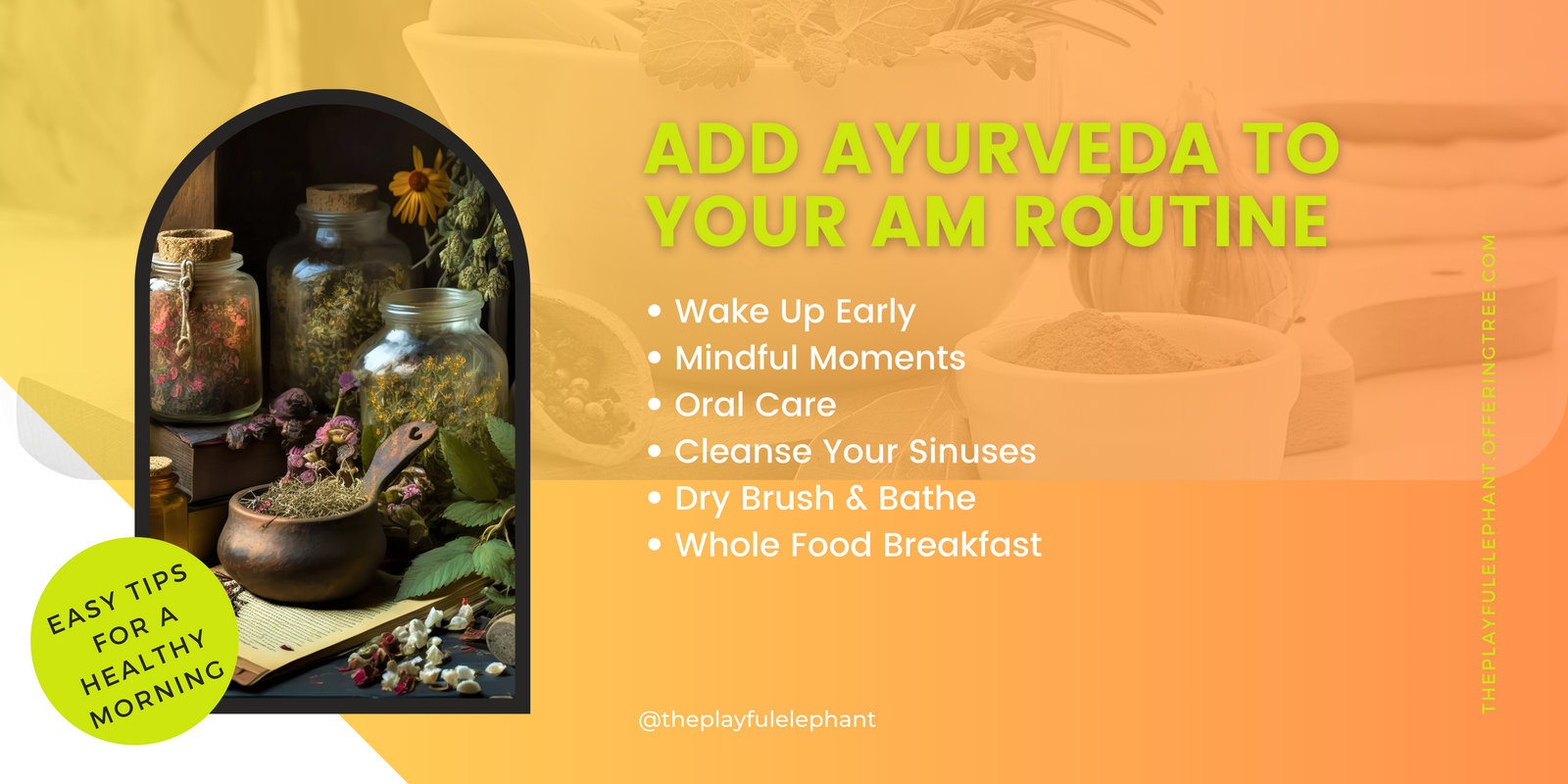
Try adding in these simple morning rituals to start your day the Ayurvedic way!

Rise Before the Sun
Ideally, you should be waking up between 4 am and 6 am depending on your dosha. Those who have a dominant pitta and vata constitution should wake up around 5:30 in the morning. If you are ruled by kapha, you should be up before 5 am. Waking up at these times will empower you dominant dosha, with the morning elements being ruled by air before 6 am, and water after 6.
Start Your Day with Mindfulness
Mindfulness can be prayer, meditation, gratitude - so many wonderful and positive things. Ayurvedic experts and doctors believe that activating satwa guna (quality of goodness) first thing in the morning will cultivate positive thoughts and attitudes. Hold off on grabbing the phone and instead, take even just a few minutes in the morning to practice a form of mindfulness.

Step Up Your Oral Hygiene
You can start by brushing with a fluoride-free toothpaste. There are many options available that contain natural clove or mint to give you a fresher breath. Oil pulling is also an essential part of your Ayurvedic morning. Simply use virgin coconut oil to swish around in the mouth, anywhere from 1-15 minutes. You can also purchase an oil pulling mouth rinse that contains refreshing herbs to, again, allow you to have a cool, fresh breath. Oil pulling helps strengthen teeth and gums as well as prevents foul breath and teeth sensitivity. Rinse with warm water after the oil, and practice scraping the tongue to further rid bacteria and toxin build up in the mouth.
Cleanse Your Sinuses
Using a neti pot with filtered water and a nasal saline rinse, cleanse the nostrils and sinus passages to help remove those tiny particulars we breathe in daily and loosen the mucus that has built up to help filter the pollution. By doing so, you may have less swelling in the sinuses, making it easier to breathe, helping with inflammation of the face, and may even prevent sinus headaches. It is especially helpful if you suffer from allergies, as you are cleaning out the dust, pollen and whatever else you may have in there. Along with a saline rinse, try adding one to two drops of anu taila oil. It is common practice to use anu taila after your nasal cleanse and should be applied in each nostril twice a week to soothe and protect the nasal passage. Try sitting comfortably with your head slightly tilted back and apply the drops in the nostrils, helping to expel excess mucous and clear the upper and lower respiratory tracts.

Beneficial Self-Massage
Before you hop in the shower, introduce dry brushing. Dry brushing is simply massaging the body with natural, dry powders. Popular powders are horse gram, barley, triphala, chickpea and green gram. This easy and natural practice can leave you skin soft, smooth and help firm. Herbal brushing will also act as a natural skin exfoliant, helping to wipe away excess dead skin, dirt and pollution build up. Daily oiling of the body using coconut oil will stimulate the lymphatic system along with maintaining balance of your doshas. And of course, daily bathing is an important part, cleansing and purifying the body, bringing in energy, and improving alertness.
Don't Forget to Eat
How many times do we need to be reminded of the importance of a healthy and consistent breakfast? We know this! Ayurveda practitioners believe that the best time to eat is between 8 and 9 am. Include a well-balanced blend of grains and seasonal fruit, pairing with the best foods and herbs that support your dosha and time of year.
After reading all of that, you're probably thinking that it seems like a lot to add into your morning. Trust me, it truly is a short and simple process once you've mastered a routine.
- Wake up early
- Practice mindfulness
- Take care of your mouth
- Clear the sinuses
- Massage with dry powder
- Shower
- Eat
We will eventually explore the doshas more in-depth, helping you to know the best ways to care for your unique body and needs. In the meantime, start adding one or two items at a time into your routine, and notice how much love your body and mind will feel!
Randi Marie Mittelberg | OCT 4, 2023
Share this blog post

Randi Marie Yoga & Wellness
Ready to Connect?
© 2026 Randi Marie Yoga & Wellness